Revolutionizing Sustainable Material Selection with mindful MATERIALS' Common Materials Framework
Key Highlights
- The Common Materials Framework (CMF) organizes over 600 data points from more than 100 certifications, making sustainability data easier to interpret and compare.
- It provides a common language and hierarchy for evaluating products across five impact areas: climate, ecosystem, human health, social equity, and circularity.
- Integration with digital platforms like Airtable and industry tools streamlines material selection, saving time and reducing confusion.
- Leading firms have adapted the CMF into internal standards, enhancing consistency and decision-making efficiency.
- The framework supports industry-wide efforts to improve transparency, accelerate certification processes, and foster sustainable building practices.
As our understanding of what it takes to design, build, and operate sustainable structures has evolved, so has the complexity of material specification. A growing array of industry-leading labels, declarations, and certifications—many with their own criteria and rating systems—has, unfortunately, resulted in an overwhelming puzzle of information and differing priorities. As mindful MATERIALS puts it, this has led to “more data, more websites, more outreach—an endlessly branching decision tree that feels inaccessible.” Everyone has the same goal of making better material choices, but siloed systems and varying definitions have resulted in duplication, confusion, and wasted effort.
Enter mindful MATERIALS (mM), an organization on a mission to inspire, motivate, and empower everyone to choose materials that prioritize health holistically and bring people, certifications, standards, pledges, organizations, and workflows together for industry alignment. What started in 2014 as an internal, spreadsheet-based material selection tool developed by Chicago-based design firm HKS, mM is now an independent 501(c)(3) nonprofit pioneering a digital material selection platform for the entire industry.
The Common Materials Framework
The gargantuan task required insight and collaboration from a variety of industry stakeholders. mM developed a content advisory board, and invited industry leaders, subject-matter experts from the AIA’s Materials Knowledge Working Group, and representatives from standards and certifying bodies to confer on the development of a Common Materials Framework (or CMF).
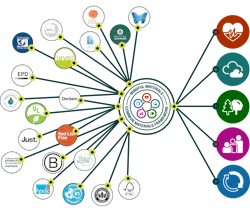
Created for everyone involved in building material decisions—from owners and the AEC community to certifiers, educators, and technology partners—the CMF maps and organizes 600+ data points from more than 100 certifications, disclosures, and standards, making them easier to understand, compare, and apply. mM describes it as an organizational rubric for sustainability data. “There is a misconception that the CMF is a data store of all this product information. We’re not quite there yet,” explains Anthony Guerrero, Executive Director, mM. “The framework right now is a taxonomy.” It’s not another certification; it doesn’t rank or score products. Instead, the CMF provides a consistent, actionable framework for interpreting and evaluating product data.

The framework is built around five holistic lifecycle impacts first identified by the AIA in their Architecture & Design Materials Pledge. “The AIA had this concept that architects should be concerned about climate health, ecosystem health, human health, social health and equity, and circularity, but they didn’t really give a lot of guidance on how to technically evaluate those impact areas. So, the CMF was established as a taxonomy for how you would look into those five impact areas,” explains Guerrero.
Hundreds of ecolabels and standards are organized within these five buckets of health and sustainability. “A Health Product Declaration would be mapped to the impact area of Human Health. And an EPD—Environmental Product Declaration—would be mapped to Climate Health. As it gets mapped to the CMF, you can fill out the wider picture. It helps you make a more informed decision across all the impact areas,” explains Guerrero.
Users are no longer evaluating a product through one lens. By defining clear categories, sub-impacts, and what mM calls T.A.C.O.-level alignment (transparency, assessment, commitment, and optimization), the framework establishes a shared terminology and hierarchy that helps the industry speak the same language. The data schema that shows how each label, certification, and declaration maps back to the CMF is housed in Airtable, a cloud-based platform.
CMF Benefits
Use of the CMF can dramatically increase the speed of the material selection process. Earning material credits across platforms such as AIA, BREEAM, IWBI, Living Future, and USGBC is far more efficient now. Instead of navigating version discrepancies and arduously comparing requirements, teams can more easily filter products and align them with project goals and certifications.
Firms like LPA Design Studios, Perkins Eastman, and Gensler have each built internal material standards by adapting the CMF into systems tailored to their workflows and priorities. LPA’s Material Impact Program (MIP), Perkins Eastman’s Material Action Plan (MAP), and the Gensler Product Sustainability Standards (GPS) all translate the CMF’s five impact areas into structured, firm-specific tools that guide material selection, specifications, and project strategy. By doing so, they create a shared internal language while still allowing flexibility across teams and project types.
This approach has been beneficial because it turns complex sustainability data into actionable guidance, improving consistency, efficiency, and confidence in decision-making. “Aligning with the CMF makes it possible for this work to become automated,” says David Briefel, Gensler Sustainability Director and mM Forum member. “That means less time chasing data and more time specifying materials that make a real difference.”
The CMF of Today (and Tomorrow)
Adoption of the CMF means that tech platforms are building to a shared schema. The mM Portal where the CMF was previously housed went dark in August 2025; it’s now accessed on Acelab, BuildingEase, BuiltCold, C.Scale, Ecomedes, Green Badger, Material Bank, Materially Better, and Sustainable Minds. Partnerships with additional technology platforms are in the works. The digital integration of the CMF into the tools the industry already uses for product data clearly shows the growing need for (and commitment to) a more connected and transparent materials data ecosystem.
“Our goal in the near future is to have robust partnerships where we can aggregate all of the data of the CMF and products into a single data store,” says Guererro. Right now, the data is stored in many different platforms that mM has license agreements with. These tech partners, along with mM and its Forum members, are building the infrastructure that makes interoperability possible. The objective is to enable structured data to flow smoothly into workflow tools, establishing a shared foundation for assessing building-level embodied impacts at scale.
As the industry evolves and new baselines are created, the CMF will change to keep pace. Input and feedback from mM’s partners and Forum members will determine when new and updated labels, standards, and data points should be added. “We created the Forums in 2023 where subject-matter experts and industry visionaries aligned to create a standard for how you select a sustainable product. They’re really the ones who continue to evolve the standards of the CMF,” notes Guerrero. mM has plans to add RFP language, performance, and design specification templates to the CMF Implementation Toolkit in the near future, as well as refine the usability of its resources and guidance and make updates focused on global applicability.
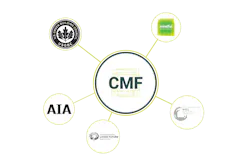
mM’s CMF is already seeing strong, rapid uptake across the building industry. It’s being used by major organizations like the AIA, U.S. Green Building Council, International WELL Building Institute, and Living Future to inform updates to leading programs such as LEED, the WELL Building Standard, and the Living Building Challenge. As Guerrero notes, adoption is accelerating because the CMF allows architects to focus on design rather than becoming material scientists. The CMF is giving them better tools without expanding their burden of expertise.
To experience this for yourself, visit mindfulmaterials.com for the CMF Implementation Toolkit Starter Guide.
About the Author
Jana Madsen
Jana Madsen is an experienced communications and marketing professional with more than 20 years of expertise in writing, editing, and content strategy developed through reporting on and working within the AEC industry. Through her work with D. C. Taylor Co., freelance clients such as Architectural Products magazine, and previous editorial leadership with BUILDINGS magazine, she's developed a strong ability to collaborate with subject-matter experts, manage creative projects, and translate complex ideas into clear, engaging, and accessible content.
Her work is grounded in a clearly defined editorial process that includes research collection, source interviews, transcript review, organization of supporting materials, and careful content development. She is committed to communicating clearly, accurately, and with integrity, always striving to present the full story in a way that resonates with both technical experts and laypersons. Known for meeting word counts and deadlines while maintaining exceptionally high standards, she relentlessly pursues details that elevate the quality, clarity, and credibility of the final piece.