Revolutionizing Material Selection: How Acelab Streamlines Architecture Specifications
Key Highlights
- Acelab offers an extensive database of manufacturers, including regional and sustainable brands, replacing fragmented and paywalled material libraries.
- The platform's Material Hub provides structured, detailed product data such as specs, certifications, lead times, and regional availability, facilitating side-by-side comparisons and informed decisions.
- Integrated with Revit, Acelab automatically updates project specifications and BIM models, eliminating manual data entry and reducing errors.
- Architect advisors provide personalized guidance on complex material selections, saving hours of research and ensuring project-specific compliance and sustainability goals.
- The platform enables instant communication with local sales reps, streamlining procurement, lead time management, and sample requests, all tracked within the system.

While technologies like BIM modeling and virtual reality have significantly advanced design capabilities and documentation efficiencies, the industry has historically lagged behind in the realm of material selection and specifications.
“It’s total chaos. Scattered PDFs across manufacturer websites, bookmarked links that go dead, Excel spreadsheets passed around the office and piecemeal tools that don't integrate. The result? 70 percent of the time firms recycle specs by default because starting fresh takes too long,” observes Vardhan Mehta, AIA, CSI, co-founder & CEO, Acelab.
Besides this enormous expenditure of time, Mehta identifies this as a major missed opportunity as architects influence 78 percent of what is actually procured and built, as reported in the AIA’s “Architect’s Journey to Specification” study. This amounts to billions of dollars in purchasing decisions.
Through the process of developing the game-changing Acelab, aimed at taking the heavy lifting out of the specification process, Mehta connected with former Revit CEO Dave Lemont. After realizing that architects were making billion-dollar decisions with consumer-grade research tools, Lemont joined the team and his connections began opening doors to continue developing the platform which launched this spring and currently lists 15,000 products, including solutions for enclosures, interiors, and finishes.
While there have been attempts to streamline this process, the industry still lacked a comprehensive solution. For example, material libraries provide product browsing and downloadable PDFs, but typically only list subscribed, paying manufacturers. Further, the product information can’t be used to collate a firm library, compare options side-by-side, and push specifications into BIM.
Specification tools that work with documentation but lack material intelligence are other types of possible, yet still problematic, solutions. “You still have to manually research products, evaluate performance criteria, and input everything yourself,” explains Mehta. “These tools miss the critical insights architects actually evaluate when making decisions such as cost per square foot installed, local availability, embodied carbon, aesthetic comparisons to alternatives, and qualification for green building credits.”
Enter Acelab
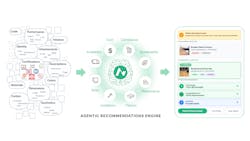
Addressing this major pain point in researching and integrating product specs into Revit models and workflows, Acelab has created a robust, three-pronged data ecosystem.
1) Abandoning the traditional pay-to-play model, Acelab lists the most available manufacturers in every category including regional fabricators, emerging sustainable brands, and specialty systems. The platform is also free for architects.
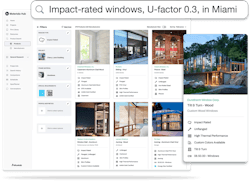
2) The Material Hub presents deep, structured product-level data including technical specs, test reports, sustainability certifications, installation requirements, lead times, regional availability and more.
3) Third-party data sets include cost data range, EPDs, code compliance, and ICC-ES reports.
The typical fragmented design process involves spec editing tools, BIM for design documentation, a product research library, an EPD library, Excel for tracking submittals, and email for vendor coordination. “That's seven different systems, none of which communicate. Data gets duplicated, version control breaks down, and things fall through cracks,” says Mehta.
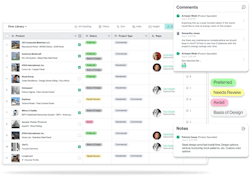
Streamlining this inefficient workflow, Acelab presents an integrated system for material decisions with research, product comparisons, firm library management, specification generation, and Revit synchronization all in one. This means that once an architect picks a product, it’s updated in the firm’s Revit families and spec language is generated simultaneously.
Stand-Out Features
Complementing the comprehensive, easy-to-search-and-compare database of building materials and products, the Material Hub offers a couple unique features for architects—free product guidance from non-partial architects and up-to-date contact information for the local sales rep.
While designers might not require this assistance with more straightforward product research, the truth is that most projects have their own unique constraints and require judgement. Mehta shares the following example:
A firm in Seattle is designing a 12-story mass timber office building. They need a curtain wall system that works with their CLT structure, meets Seattle energy code, achieves their embodied carbon targets, stays within their $85/sf facade budget, and delivers aesthetically because the client wants warmth, not clinical. Oh, and they need to start construction in 11 months, so lead time matters.
That's not a simple database query. It requires someone who understands wood-frame detailing, thermal bridging at structural connections, local code interpretation, sustainable product sourcing, value engineering strategies and Pacific Northwest supplier networks. Our architect advisors provide that expertise.
An architect can send a message through the Material Hub platform with all these details and within a few hours, the advisor responds with a few curtain wall recommendations explaining the benefits, tradeoffs, and potential issues. The advisor will also connect the architect with local reps who can provide pricing and samples.
“That concierge element is hugely valuable. The response has been remarkable,” observes Mehta. “Time is money in architecture. If an advisor saves a project team four hours of research and procurement coordination on every material decision, and there are 200 to 300 specified items per project—that's real efficiency gain.”
The value of instant connections with reps is also significant. The fact is that designers waste a lot of time Googling manufacturer information, filling out “contact us” forms, waiting and getting bounced around until they may or may not find the right person in their region and market sector.
“In Material Hub, every product page shows the local rep contact for your region—direct email and phone. Firms can reach out to multiple manufacturers simultaneously for pricing, lead times, samples, or project consultations. What used to take weeks of phone tag and email threads now happens in days, with all communication tracked in one place instead of scattered across inboxes,” he explains.
The platform also acts as a personalized repository for every firm in building their own pre-approved, vetted vendor list that can easily be accessed for future projects in one centralized, organized space. Again, a significant savings of time and energy.
What’s Next
For the more than 115,000 architects and designers from 20,000+ firms currently registered on the Material Hub, Acelab is expanding its product categories to include FF&E, and more landscape, control systems, and mechanical, electrical and structural engineering systems by Q1 of 2026.
The team also plans to launch an Archicad plug-in within the same time frame to complement its current compatibility with Revit.
Interested in learning more? Check out this process-redefining new webiste here.