Innovative Design Approaches for Resilient Multifamily Housing
Key Highlights
- Relocate primary mechanical and electrical systems above anticipated flood elevations.
- Size rooftop PV systems for critical loads.
- Use ductless mini-split HVAC systems to increase leasable space and localize failure zones.
- Specify filtration to handle extended smoke events.
Resilient design in multifamily usually focuses on one thing: creating a building that can take a hit. The harder question to consider is what happens in the hours after an event.
Power outages, flooding, wildfire smoke, extreme heat. These don’t just damage structures. They shut down the systems residents depend on every day. Elevators go dark. Garage access fails. HVAC stops circulating. In a multifamily building, 48 hours without these systems means evacuation. Getting residents back in afterward takes longer than fixing what caused it.
Most of the design responses pencil. They’re less about exotic technology than about where standard systems get placed and how they’re specified.
Placement as Strategy
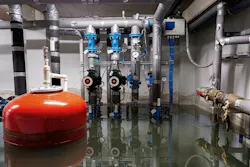
The most common resilience failure in multifamily is also the most preventable: mechanical and electrical infrastructure in below-grade utility rooms. Flooding takes it offline first and keeps it offline longest. Relocating primary switchgear, HVAC plant, and emergency systems above projected flood elevations isn’t novel engineering. It’s a placement decision most projects still don’t make because the default hasn’t changed. Mechanical rooms go in the basement because that’s where they went on the last project.
The added cost is modest, and shrinking as floodplain regulations update. Recovery time is what changes. A building with primary systems above the flood line can restart operations days or weeks ahead of one that has to pump out, dry, and replace submerged equipment. Submerged switchgear often can’t be re-energized at all. It has to be replaced. That’s a building sitting empty while components are ordered.
Sizing for Recovery & Revenue
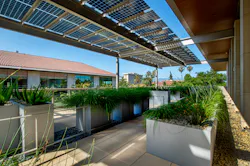
Rooftop photovoltaic systems are standard on new multifamily construction. Almost all of them are sized for energy offset, not for operational continuity during grid failure.
A PV array sized to maintain critical loads during an outage is a different spec: battery storage and load prioritization for elevator operation, emergency lighting, garage ventilation, fire alarm, and access control. That’s the difference between sheltering in place and evacuating.
The financial case has caught up with the resilience case. Even in markets as far north as Ohio, a properly structured rooftop PV system, one where residents pay the operator for the electricity the building generates, can contribute 1–2% to a deal’s IRR. That’s not a rounding error in a multifamily pro forma. Same product, different specification intent, and different financial structure. One sits on the spec sheet as a sustainability line item. The other sits on the rent roll.
Less Duct, More Floors

The same logic applies to HVAC. Ductless mini-split systems compress floor-to-floor heights because they don’t need ducted plenums. On a height-constrained site, that can mean an additional floor of leasable area. Fewer ducts also means less mechanical penetration of structure, less structural complexity, less material, and lower embodied carbon.
Most projects make this selection on autopilot. Central VAV because that’s what got drawn last time. Mini-splits aren’t right for every project. Where they work, they change three things at once: resilience profile (zone-by-zone failure rather than whole-building shutdown), unit economics (one more floor of NOI), and carbon (less concrete, less steel).
Envelope & Filtration
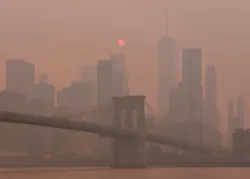
Wildfire smoke is no longer just a concern in Western markets. The Canadian smoke that blanketed New York and the mid-Atlantic in June 2023 pushed AQI readings above 400 for multiple days. The risk in those conditions isn’t structural. It’s indoor air quality degradation that makes units uninhabitable even when the building is undamaged. A building that can’t maintain air quality evacuates just like one that lost power. The recovery timeline is the same.
The design response starts with tighter envelopes. But the envelope alone isn’t enough. Filtration has to be specified to handle extended smoke events, with the mechanical system capable of switching to higher filtration mode without someone manually changing filters. The components exist. They’re rarely specified together as an integrated response. They show up in separate spec sections, and nobody connects them.
The Specification Shift & Marketing Shift
Every system described here exists in current product catalogs. What’s changing is the design logic, and increasingly, the marketing logic. A building designed to stay online when the grid goes down leases and retains at a premium. Residents who rode out a five-day outage at the comparable property a mile away know exactly what that’s worth.
Put the mechanical room on the mezzanine. Size the PV array for critical loads and structure the deal so electricity generates revenue. Spec mini-splits where they unlock a floor. Spec filtration as a system, not as components meeting code minimum. These are decisions architects make on nearly every multifamily project. They don’t add new products to the spec; they change how existing products get specified. And how the building gets sold.